Keynote Speech by Bernie Quinn
CEO of Premcar Pty Ltd
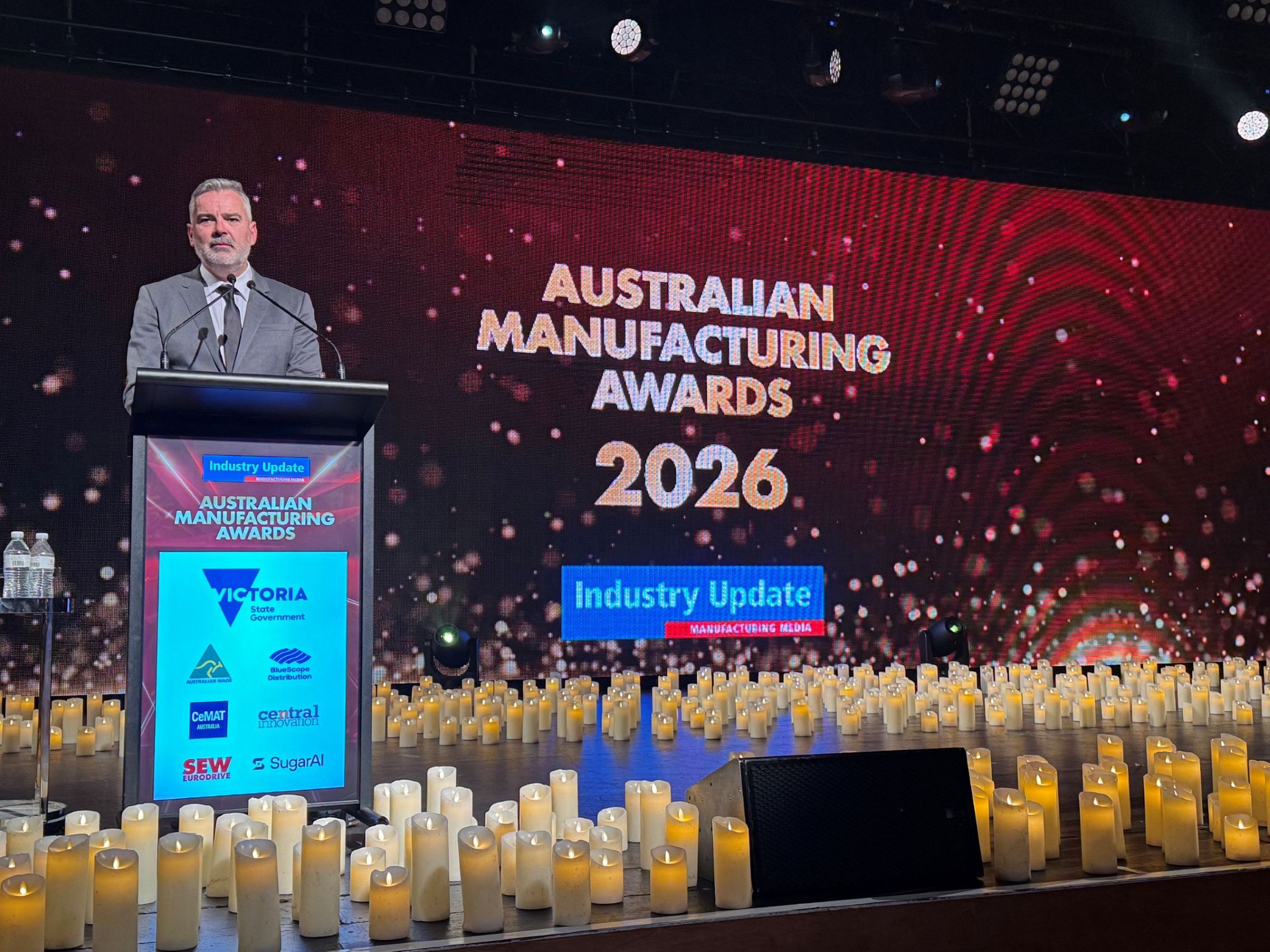
Australian Manufacturing Awards 2026
Melbourne, Australia
Thursday, 8 October 2026
I want to clear something before I start.
When people hear the name Premcar, they think it means ‘Premium Cars’.
But I have a confession to make. The truth is, that name was proposed by a former colleague.
When we were deciding on a company name, he saw an opportunity to promote his footy team. So he came up with PREMCAR – as in ‘Premiers Carlton’. And he didn’t confess until AFTER the name was registered.
As a Hawks fan, you can imagine how that went down. But we liked the name – so we stayed with it.
**********
Let me paint a scene for you.
It’s May 2012. I’m the Engineering Director at Ford Performance Vehicles. FPV was Ford Australia’s performance car division. It was a JV between Ford Australia and a UK company called Prodrive. Yes, the same Prodrive behind Colin Macrae’s rally success and Le Mans racing cars for Aston Martin and Ferrari.
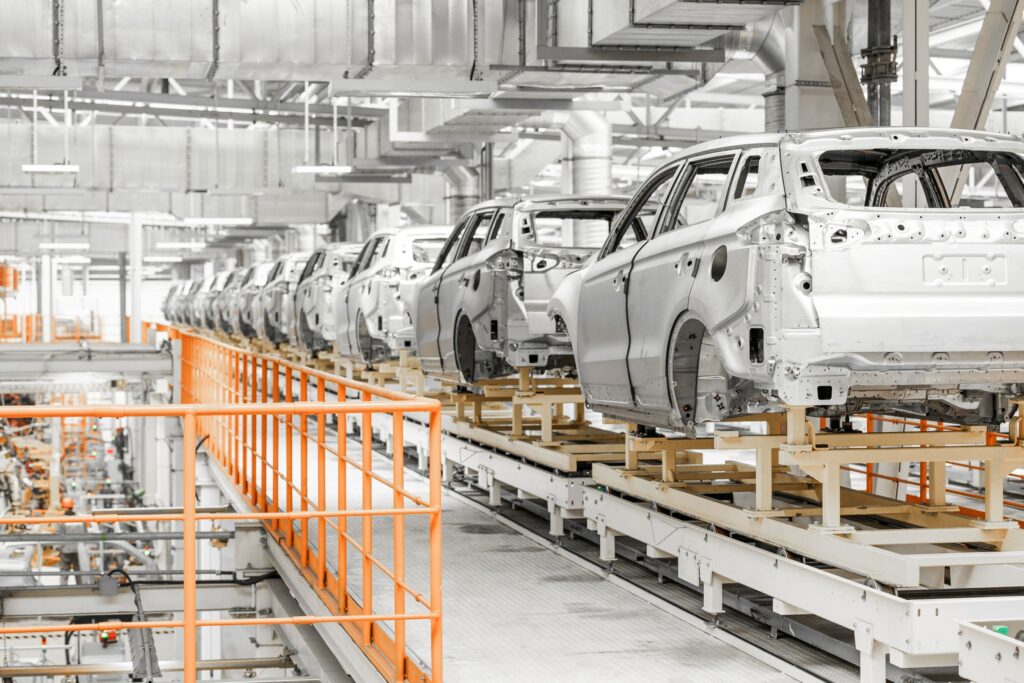
In Australia, we engineered and secondary manufactured special cars such as Ford Falcon GTs and other niche models. We built lots of them over the previous decade.
But local sales of Australian made Falcons had been falling steadily. They used to be 100,000 a year. That figure had dropped to about 30,000.
Ford needed to keep its big Broadmeadows car factory busy so it gradually took most of our work in house.
Prodrive saw the writing on the wall so they offered the business for management buyout. Three of us stood up. Standing up caused me the greatest stress for the next 4 weeks. On May 31 – the final day – we had until midnight to sign the deal. I think we signed just after 11 PM.
We’d bought a business that originally had 200 staff. We had secondary manufactured more than 200,000 new cars. We’d built more than 50,000 V8 engines. Now, we had a team of just 25, and a business to completely rebuild.
That’s how Premcar started.
**********
The business originally began in 1996 under the name Tickford. Prodrive later bought Tickford and it changed names.
It then became Premcar when we took it on 14 years ago.
And our business celebrated its 30th birthday last month.
Now, you probably think Aussie carmaking died in 2017. But it didn’t.
Large scale carmaking might have stopped, but Premcar kept going. We maintained our purpose of engineering and developing new cars. And we did it by branching out.
It was difficult. We searched overseas. We showed other carmakers what we could do for them. And we eventually – and slowly – gained new clients.
Because we prototyped our first electric car with a Ford Territory in 2009, Premcar soon got the call to create its first EV platform.
We worked behind the scenes with a growing list of car makers.
We created suspension packages for many global car brands.
And we filled critical gaps when they ran behind on new-car programs.
Like a brick wall, we slowly rebuilt the business. Brick by brick.
And all the while, the car industry kept changing. Aussies had migrated from big sedans to big SUVs. And then from big SUVs to mid-size SUVs. And then the dual cab 4×4 ute segment took off. And then electric cars started to get a foothold. And all of those segments have since grown. And more car brands started joining this VERY competitive market.
It was easy to be overwhelmed by all this, but it did one thing: It forced us to adapt.
It made us differentiate.
We moved into aviation. We developed our first helicopter for a big Japanese manufacturer.
We got into Defence work, as well. We started with a major powertrain project for land-based military vehicles.
And it’s just kept building.
We got into the off-road 4×4 business with Nissan. Their WARRIOR by Premcar brand started in 2019 and it’s been hugely popular. We took their Navara 4×4 ute and re-engineered it for Aussie conditions. We secondary manufactured them on our assembly lines in Epping. Then, they asked us do it with another version of their Navara 4×4.
We later did it for their famous Nissan Patrol SUV. We’ve so far built more than 17,000 new vehicles for Nissan.
Then Mitsubishi asked us to do something similar for their Triton 4×4.
And the secret to all of this?
Adding value.
Adding technical value and product value for Australian customers. It’s added huge value for these global car makers.
It’s been challenging, it’s consumed all of our energy but it’s been important. It’s been important for so many reasons, and not just financial reasons.
Sovereign capability is just one of them.
Because this is the simple fact: Countries need to be able to make their own things. And Australia is no exception.
Of course, not everything can be made at home. Some things need to be brought in. But the ability to make things is what’s critical. It certainly is in the auto industry.
In 2008, an Australian government report said this:
Australia was one of only 15 countries that could take a new car from concept to full production. In other words, from a pencil sketch of a car to a new car in a showroom – ready to buy. One of just 15 out of almost 200 countries.
And here’s the best bit: We still have this ability.
This generational industrial knowledge is STILL HERE. It’s alive and well. It just needs to be shifted into a higher gear. But the clock is ticking.
I’ll ask the obvious questions:
Can Australia compete with China in making new cars? It doesn’t need to.
Can we return to local car manufacturing? Absolutely – and it doesn’t need to be the same as before 2017.
We’ve mapped plans. We’ve done the maths. We just need the right conditions to do it. Because every carmaking country – including Japan, Germany and China – creates the right conditions to make their own cars.
And keep this in mind: Carmaking – like many of YOUR sectors – overflows with these:
Transferrable skills.
We use them in the defence, aviation and marine industries.
We use them every day with automakers in different countries.
We use them on different vehicles types.
We’ve put vehicle control systems into aircraft.
We’ve put car engine know-how into battlefield vehicles.
We designed and developed a helicopter rotor gearbox using vehicle powertrain knowledge.
Transferrable skills are powerful.
And a country rich in APPLIED transferrable skills, one that makes its own things, is a country in control of its future.
Now, it’s one thing to be able to do these things. It’s another to industrialise them.
By its nature, manufacturing is difficult. Everyone in this room knows this. Whether you make wine bottles or widgets, squeezing the most from every resource is hard. Boosting productivity is a never ending quest.
The Australian Industry Group and the RBA have diagnosed Australia’s low productivity.
They say the reasons are:
- Reduced investment, including in R & D
- Shortages of skilled workers
- We’re slower to adopt new technologies
- Overlapping regulations
- The high cost of running a manufacturing business
- And more
Outwardly, they’re all fixable. But fixing them needs a combined effort. And it will take time.
And governments at all levels need to lead the way.
- Simplify the regulations
- Help reduce energy costs
- Announce manufacturing-related policy changes well in advance
- Continue investing heavily in training and long-term skill development
- Focus even more on apprenticeships
Just make it easier for all of us to GROW and SUSTAIN. Remove the friction.
Growing a manufacturing business in Australia shouldn’t be like pushing a boulder up a steep hill.
It should be like a driving a maglev train at full power.
And that brings me back to the start.
We pushed that boulder when Prodrive became Premcar 14 years ago. Yes, we jumped out of the frying pan and into the fire. And nobody was going to make it easy – not back then.
But the need for Australia to keep making its own stuff was still there. It’s still here today. If anything, that need is growing. And it becomes more urgent with every passing year.
Because our industrial knowledge needs to be passed on internally and it needs to be put to full use.
It took generations to build. And we could lose it ALL in a single generation. But everyone in this room is helping prevent this. And our future will thank you for it.
Premcar has never been busier. We’ve never had so many customers. And we’ve never had such a bright future.
And with the right conditions, Australia can shift into at-scale carmaking again – in a different way. I know other manufacturing sectors are facing similar possibilities. And I hope they ALL convert into results. Because they need to – for the sake of Australia’s future.
The message is simple:
A country rich in applied transferrable skills, one that makes its own things, is a country in control of its future.
To all of tonight’s finalists – and to everyone here tonight – thank you for making Australia’s future.
I want to thank Scott Filby and his team for inviting me to speak tonight.
Thank you.
Bernie Quinn, CEO of Premcar
About Premcar:
Premcar Pty Ltd is a leading Australian vehicle engineering business that specialises in the automotive, defence and aerospace industries. For 30 years, global car-makers have made Premcar their go-to partner for the complete design, engineering and manufacture of niche-model new cars, full-scale new-vehicle development programs, and electric vehicle (EV) conversions and manufacturing. Premcar’s body of work is extensive. It is the name behind more than 213,000 new cars and 55,000 new-vehicle engines. The company has delivered technical advancements and sales success for major car brands from Europe, the USA, Japan, China and Australia. Visit premcar.au.