Big horsepower is about removing, not adding – especially if you’re an automaker.
Performance-enhanced new cars often have higher-output engines.
More power and more torque for quicker acceleration, faster response and higher top speeds.
Creating these engines is straightforward, right?
Bigger airbox, remap the engine ECU, bigger exhaust system, bigger turbos, and so on.
Well, yes – and no.
Applications
First, some quick basics.
OEM-level engine enhancement is always about taking an engine designed for one application and changing it to suit another.
Common examples include taking a V8 or V6 engine and adding forced induction (i.e. turbos or a supercharger). We’ve designed and produced tens of thousands of these over the last 30 years with companies like Ford and Toyota.
Engine designers treat IC engines as air pumps. It’s about how much air you can get in, how you combust it, and then get it out.
Setting boundaries
Step one in a Premcar OEM engine enhancement program is to create a boundary around the combustion chamber.
This means establishing a set of “not to exceed” conditions within the combustion chamber.
This shows where not to introduce extra loads and temperatures and to manage these increases where they’re going to occur.
The engine will have already undergone a complete OEM development and durability program to make it suitable for mass production. This means you can only make technical changes with great caution and consideration – otherwise you’ll probably face a hefty development bill.
We often hear of engine enhancement work that is “within factory tolerances”, but that sentence needs caution. Those tolerances were design-determined for the engine’s original application, not its new application as a high-performance power unit.
Despite what many people might tell you, automakers and OEM suppliers typically don’t design engines with a vast amount of “extra headroom” to give enthusiasts and the aftermarket lots of space to “play”. (Sorry folks, that’s the truth.)
All of this explains why it’s vital to factor in the engine’s original durability levels when you’re planning to hot-rod it.
Removing losses
The second step is to focus on the engine’s parasitic losses.
If you’re going to add a supercharger, a bigger turbo or introduce far more combustion air into the cylinders, you need to focus on the efficiency of the systems around the combustion chambers to avoid losing control of the engine’s in-cylinder loads and temperatures.
This is critical for piston crowns, rings, gudgeon pins, rods, small- and big-end bearings, and so on – basically, everything moving inside the engine.
Controlling these cylinder loads and temps means removing or reducing the losses either side of the combustion process.
Reducing induction losses requires work like optimising intake port design, or the air intake system from the dirty-air duct to the intake manifold.
You can do the same on the exhaust side, with a focus on the manifold, the catalyst and the exhaust plumbing.
This way, you get the horsepower and torque gains while leaving the combustion chamber relatively unaffected and unchanged.
Here’s a real-world example from one of our previous engine programs: The 370 kW (496 hp) “Sprint Six”.
This was the final turbocharged six-cylinder petrol engine used in the Australian-built Ford Falcon.
Getting that output level meant addressing the car’s first big restriction, which was its exhaust catalyst. Too much pressure was needed to press the exhaust gasses through it.
Our first development prototype catalyst was an evolution of a Ferrari 360 metal mount matrix catalyst with low back pressure and high efficiency.
On the intake side we needed to minimise the pressure loss, which we managed with how the ‘dirty’ (atmospheric) air was managed before entering the intake system post-air filter.
By the time we had refined the turbocharging system, we’d created an OEM engine that delivered 650 Nm (479 lb-ft) of torque from a factory engine that was originally naturally aspirated and designed to deliver 380 Nm (280 lb-ft).
But this newly enhanced engine passed the same original durability and emissions testing with its new levels of performance, mostly thanks to careful management of in-cylinder combustion loads and temps.
There are still many of these cars still happily in use on local roads after more than 240,000 kilometres (150,000 miles) of service.
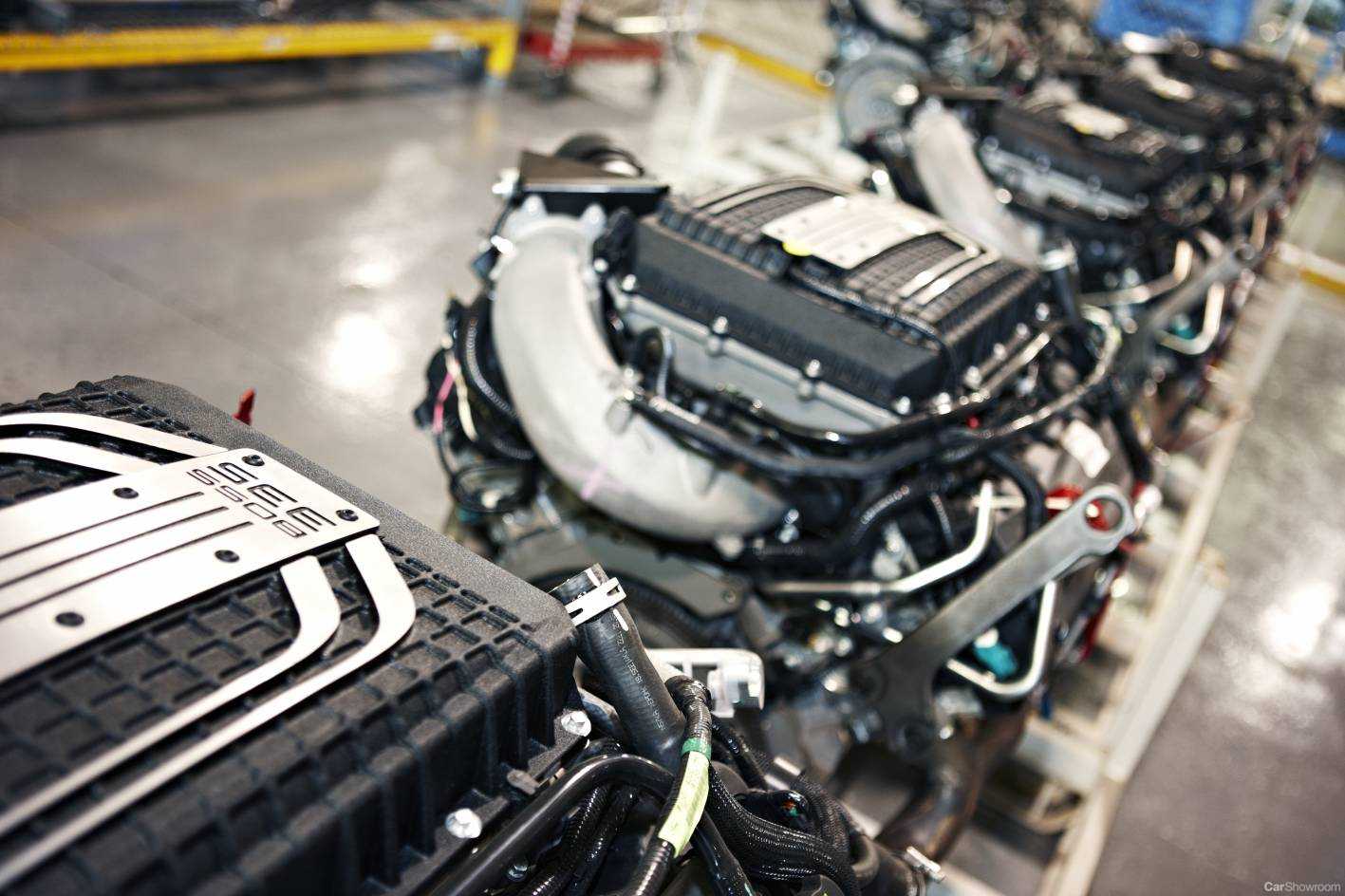
It’s a similar story with this supercharged V8 engine we developed and secondary manufactured.
This is why just ‘adding bigger turbos’ and ‘using a new map’ or ‘reflashing an ECU’ doesn’t cut it in OEM engine enhancement.
It’s all down to the stuff you can’t see inside the engine. That’s where you need to focus.
And managing these invisible elements starts with removing the original engine’s efficiency shortcomings, not adding trick equipment that masks it, which in turn can create new problems.
Remove first, and then add within the engine’s boundaries.
That’s how you preserve engine durability and safety – and avoid engine-related warranty claims – when you performance-enhance OEM-spec engines for an automaker’s new cars.
It keeps happy customers happy.
OEM engine hot-rodding needs a specific approach.
‘Bolt-on horsepower’ might look like an obvious answer, but it’s what happens (or doesn’t happen) afterwards that matters most.
Bernie Quinn, CEO of Premcar
About Premcar:
Premcar Pty Ltd is a leading Australian vehicle engineering business that specialises in the automotive, defence and aerospace industries. For more than 25 years, global car-makers have made Premcar their go-to partner for the complete design, engineering and manufacture of niche-model new cars, full-scale new-vehicle development programs, and electric vehicle (EV) conversions and manufacturing. Premcar’s body of work is extensive. It is the name behind more than 200,000 new cars and 55,000 new-vehicle engines. The company has delivered technical advancements and sales success for major car brands from Europe, the USA, Japan, China and Australia. Visit premcar.au.